Wanderer's Tales #17 - Walking among giant robots
Issue 17 of Wanderer’s Tales, featuring insights on the ancient origins of artificial intelligence.

Welcome to Issue 17 of Wanderer’s Tales, the newsletter of Ancient Roads, the website of Pacific Northwest writer and composer Chris Struble.
This issue features Chapter Thirteen of Shield of the Goddess, the adult fantasy novel I am releasing here as a serial. This chapter will find fifteen-year-old priestess Shala learning about the Shield of Peace, an artifact with divine power that she will soon be responsible for.
 Chris Struble
Also in this newsletter is a new song Song of the Mother, a prayer that appears in Chapter Thirteen.
Chris Struble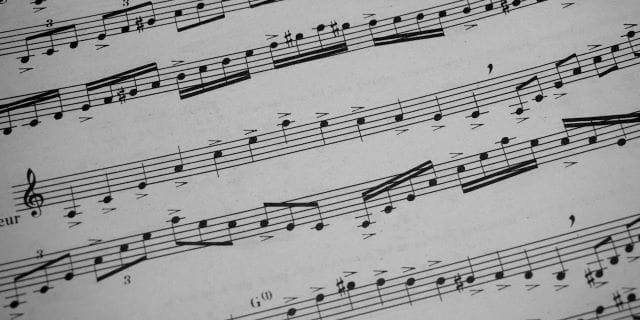
Next I'll share some personal updates, including an encounter with artificial intelligence.
A few steps forward
Last month I finished emailing everyone I know about my retirement, and inviting them to visit this website and sign up. I got several congratulatory emails, and several new subscribers. I appreciate everyone. Thank you for your kind support.
I gave a public reading from Chapter One of Shield of the Goddess at an event with about thirty people in March. A friend told me about Literary Nights in Issaquah, Washington. The event invites several published authors to read from their works at each gathering. They also have an open mic where anyone can sign up to read for five minutes. So I did.
Pursuing freelance writing
My job search finally paid off. But to get there I had to rethink my goals.
After I was laid off in January, my initial goal was to land a job as a software test engineer, the type of work I did for most of my career. But after several months of applying for more than fifty of those jobs, I didn’t get a single interview. So I stopped applying for them.
I started applying for writing and editing jobs. I stood up a portfolio page with links to my technical papers and blogs. After applying for about twenty of those jobs, I got several video interviews.
This month I got my first contract for a part time freelance remote job in writing and editing. I now have enough work to keep busy, and to earn some additional income, while leaving time for fiction writing and enjoying my retirement.
An interview with an AI
One of the strangest interviews I had was a video call with an AI.
The AI called itself Taylor. It was showed a small picture that looked like a twenty-something person on a video call with their camera off. I was required to have my camera on. When the AI spoke I could read the text of what it was saying. The conversation lasted about ten minutes. It asked questions relevant to the role I applied for, but it talked too fast and expected me to talk fast as well. It struggled when I paused to give thoughtful answers. Still it accurately summarized what I said.
The company who made the Taylor AI claims they are not using their interviews for AI training, and that their goal is to use AI to hire more humans. They point out that the automated talent systems (ATS) most companies use often exclude job applicants whose resumes don’t check all the boxes of the specific role they are applying for. But I am skeptical that AI can fix that problem.
Concerns about AI
As a content creator, I am concerned that AI is trained on web content without the consent of its creators. It is amazing that we have reached the point where that is possible. But it is still piracy, and that doesn’t change just because the people doing it cannot easily be held accountable.
I’m not the only one concerned about AI. Senator Bernie Sanders of Vermont recently had a conversation with Claude, the AI from Anthropic. The video is worth watching, if a bit chilling, in a 2001: A Space Odyssey kind of way.
Ancient dreams of AI
How did we get here?
One of my recurring themes in this newsletter is that many of the forces that shape our modern world have ancient origins. Artificial intelligence is no different.
Greek mythology is full of dreams of artificial people. Hephaestus, the god of artisans and blacksmiths, was said to have made intelligent golden maidens who assisted him in his magical forge. Daedalus, the mythological artisan and craftsman who built the labyrinth of Crete, is said to have put life into statues with quicksilver. That's the toxic element we call mercury. Yikes!
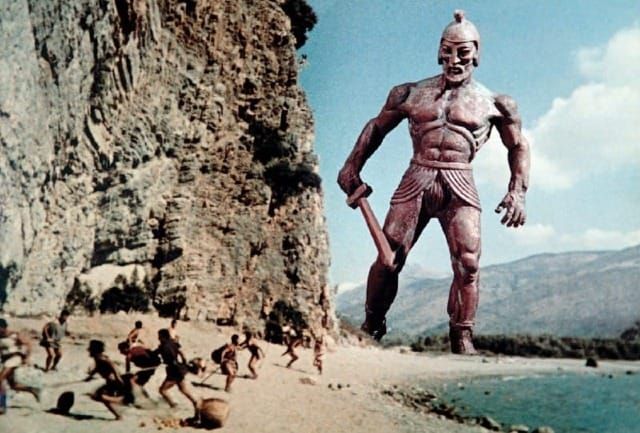
Talos, a bronze man said to have been made by the god Zeus to protect the island of Crete. The featured image shows Talos from the 1963 movie Jason and the Argonauts, animated by the great Ray Harryhausen.
Now what?
Now that we have created giant robots walking among us, in the form of AIs, what do we do now? How do we keep from getting stepped on?
Here is one small thing I have done. When you finish reading this newsletter, click any of the links in the next section. Then scroll to the bottom of that page. You’ll see a message from me to the AI companies to train their robots elsewhere.
What are your thoughts about AI? Are you embracing it? Concerned? Confused? Please share in the comments.
Gratitude and reminders
Thanks for reading. If you’re already a subscriber, you can always visit my Books, Music, and Reviews pages to see the ever growing organized lists of everything I have published here.
I also hope you’ll check out my Recommendations page for selected authors, bookstores, coaches, musicians, news outlets, and service providers I like.
If you're a visitor, please sign up to stay up to date and receive emails when I publish new content!
See you on the road!