7 Truly Ancient Civilizations to Inspire Your Writing
From the oldest temple to master archers, here are seven truly ancient civilizations to spark your imagination.

If you hear the words “ancient civilization”, you might think of Old World kingdoms like Egypt or Sumer, classical empires like Persia, Carthage, Greece, and Rome, eastern empires like India or China, or perhaps New World empires like the Aztec or Inca. All of these can be compelling settings for historical fiction, or inspiration for speculative fiction or fantasy. But these represent only a tiny fraction of the places, times, and lifeways of human beings in the past ten thousand years or more. Humans were doing amazing things long before, and beyond the reach of, ancient empires.
Here are seven ancient civilizations from five continents that you may not have heard of. Read more about them and find inspiration for your creativity and imagination.
Jomon, Pottery Innovators of Japan: 14,500 B.C.E.
Sixteen thousand five hundred years ago, a people called the Jōmon living in Japan created what were long thought to be the oldest ceramic pottery vessels anywhere in the world. These vessels were first discovered at a site known as the Ōmori shell-mound near Tokyo in 1877. The name “Jōmon” was coined by American archaeologist Edward S. Morse from the Japanese words for “cord-marked”, after the distinct impressions left by cords used in making the pottery.
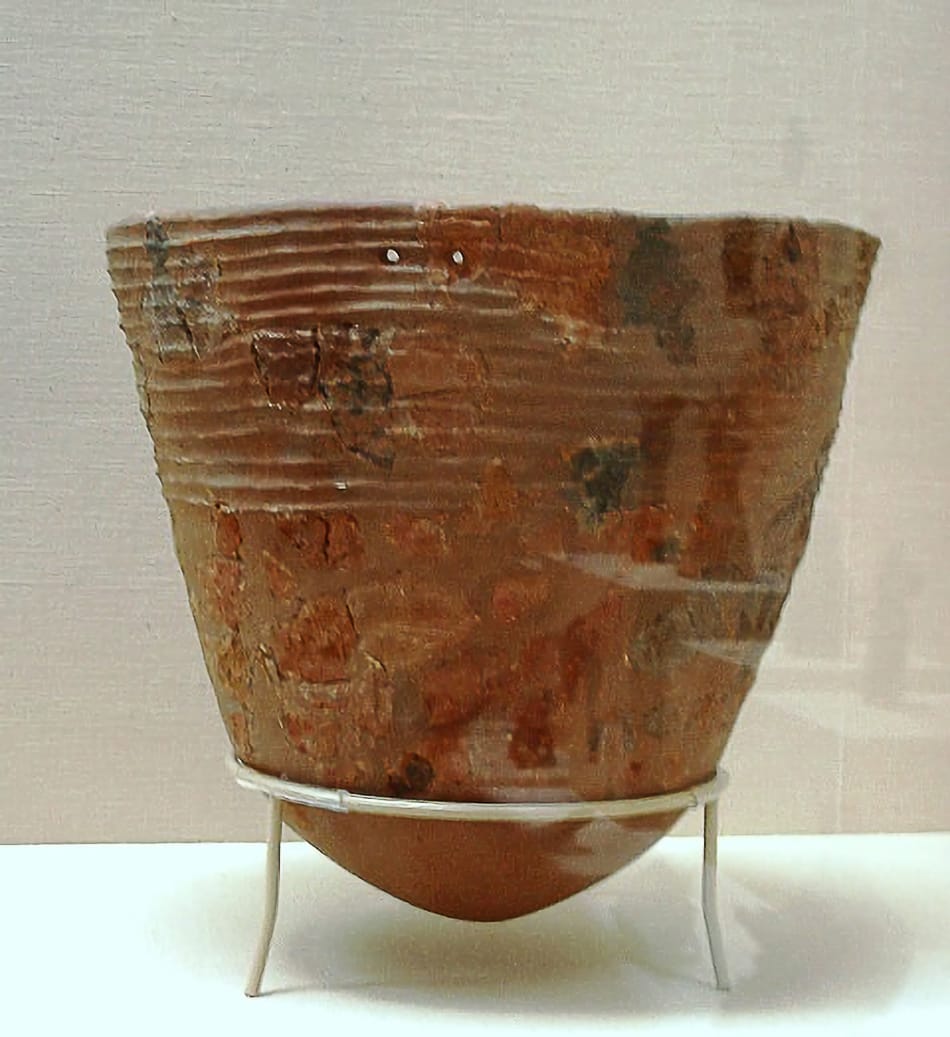
The Jōmon at that time were hunter-gatherers who had neither permanent settlements nor agriculture. The discovery overturned an assumption that pottery only emerged from the need to store grain in granaries in agricultural settlements.
More recently, earlier pottery vessels were found in China dating to twenty thousand years ago (18,000 B.C.E.). Still, the Jōmon are the second earliest culture known to have pottery, 8000 years before the earliest evidence of pottery in Europe. A 2013 discovery showed that they used their pottery for processing fish.
Around seven thousand years ago (5000 B.C.E.), the Jōmon began to transition from hunter-gathering to settlements and agriculture, cultivating trees such as lacquer, chestnut, walnuts, oaks, and peaches, and crops such as soybean, adzuki beans, and hemp. They lived in small villages in pit houses dug into the ground. They also fished and traded in dugout canoes. A 2025 study reconstructed what Jōmon fishing nets might have looked like from impressions in the pottery.
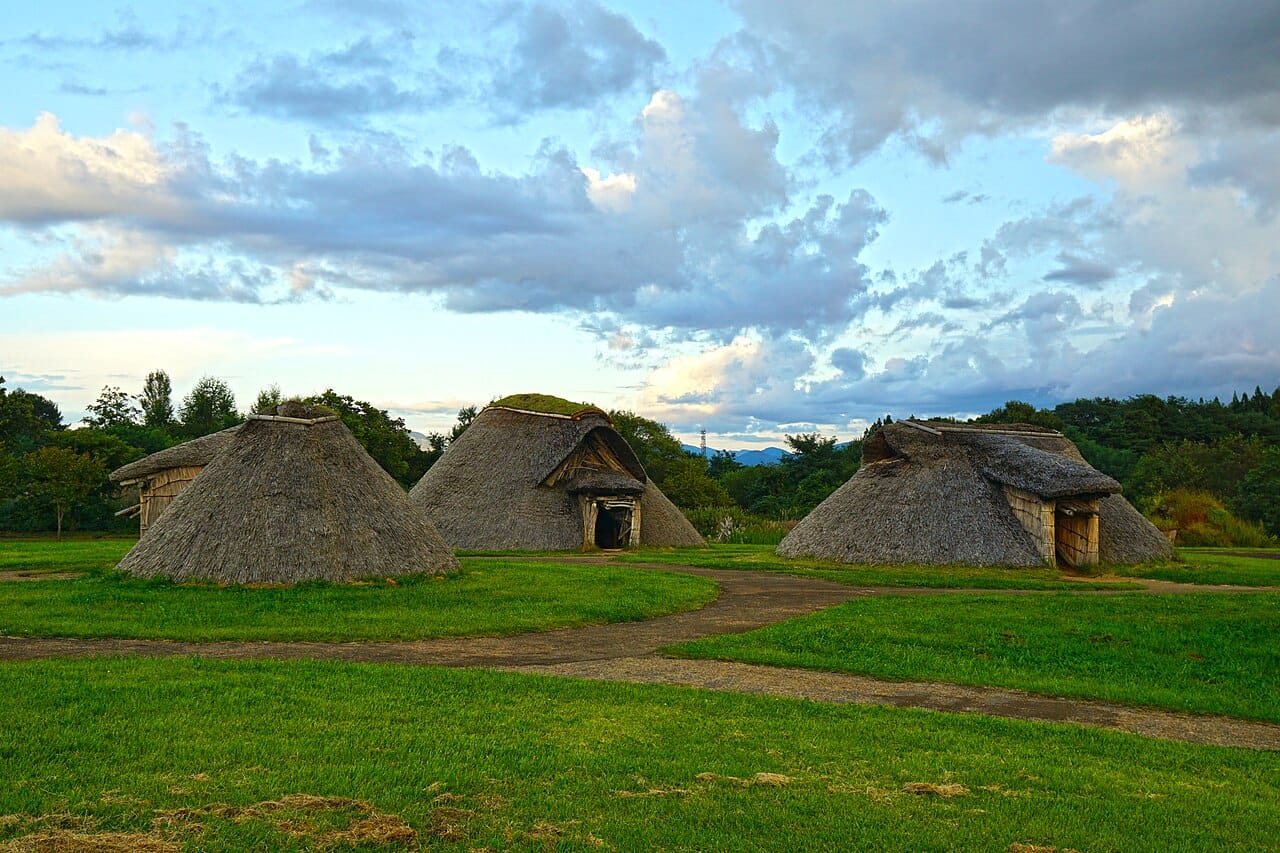
Perhaps the most impressive accomplishment of the Jōmon period is that it persisted for more than thirteen thousand years.
Göbekli Tepe, The First Temple Builders: 9500 B.C.E.
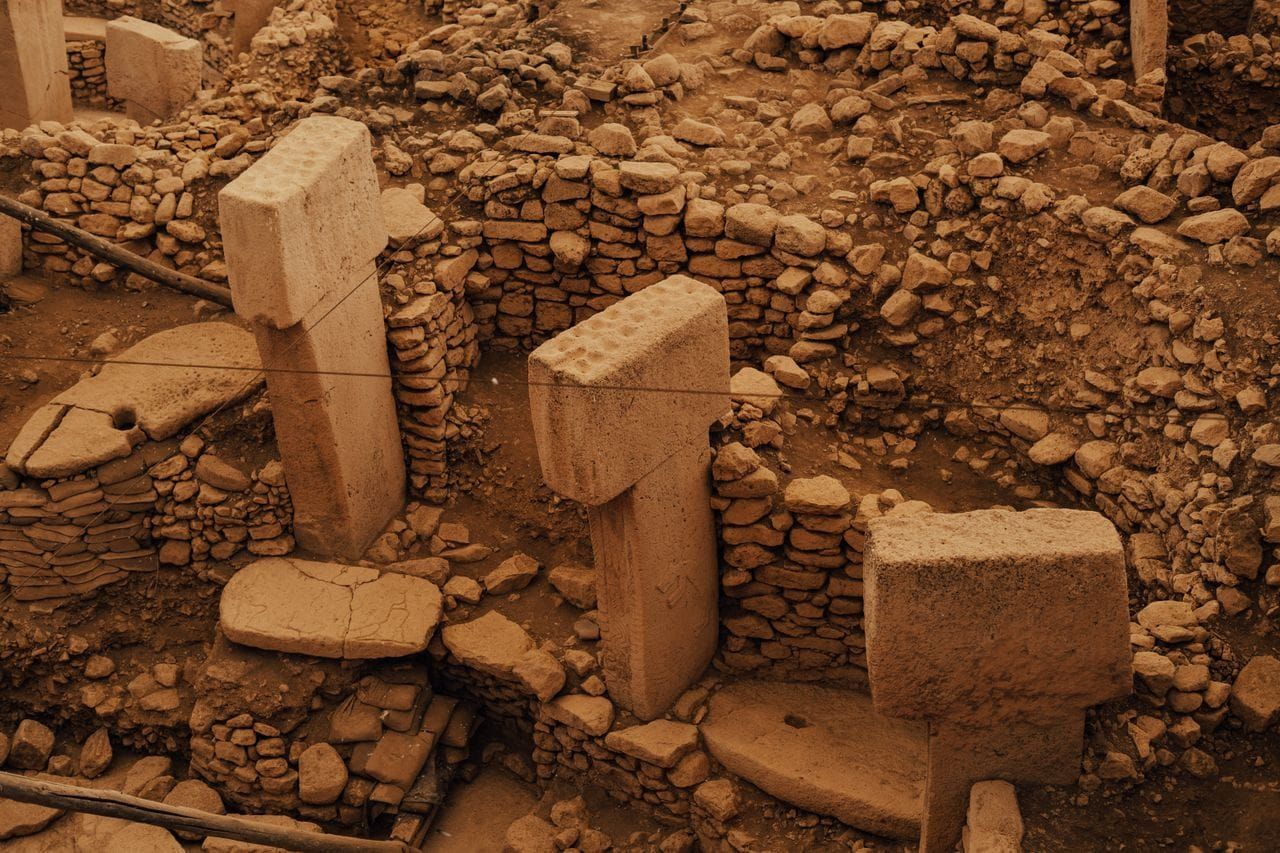
Eleven thousand five hundred years ago, a Neolithic culture built a megalithic structure (see the featured image at the top of the page) with T-shaped stone pillars, circular enclosures, and stone walls on a hilltop in Türkiye called Göbekli Tepe. Many of the pillars are decorated with pictograms and carved animal reliefs depicting lions, bulls, boars, foxes, gazelle, and donkeys, snakes, birds, and insects.
The builders were a hunter-gatherer culture, but they also had a nearby village occupied at least part of the year, where evidence of grain processing was found. They did not have pottery, which would not reach the area until later. The site was used for one thousand five hundred years.
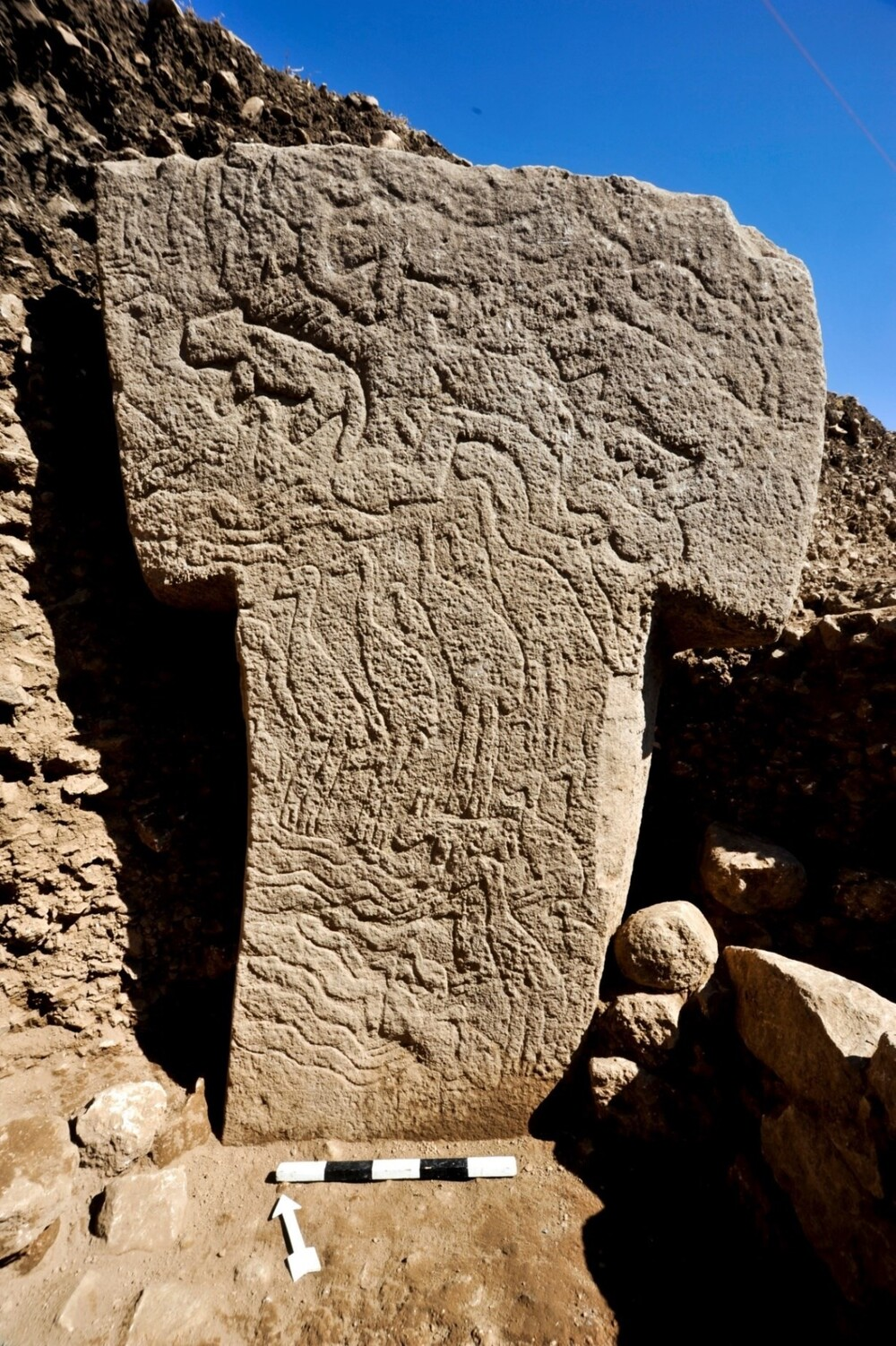
Because the structure clearly had a ritual purpose, and is the oldest megalithic structure known (seven thousand years older than Stonehenge), Göbekli Tepe has been called the “oldest temple in the world”. But this is only one of the many theories proposed to explain its purpose.
Göbekli Tepe was first surveyed in 1963 but wrongly dismissed as a medieval cemetery. German archaeologist Klaus Schmidt began excating there in 1994 and soon realized the site was much older. Göbekli Tepe was designated a UNESCO World Heritage site in 2018.
Old Copper Culture of the Great Lakes: 6500 B.C.E.
Eight thousand five hundred years ago, the first copper tools and weapons in the world were made in a place you might not expect: in the New World, near the Great Lakes of North America. Copper tools and weapons would not emerge in the Old World for another 2000 years.
The Old Copper Culture were Native American hunter-gatherers who lived near Lake Superior. Glaciers left copper deposits near the surface that were more than 95% pure. The people extracted the copper using stone hammers, heated and annealed it, and then used hammers again to shape it. And shape it they did, into artifacts of every kind: chisels, axes, awls, needles, fish hooks, harpoons, knives, jewelry, and spear points (but no arrowheads, as archery had not yet reached the area).
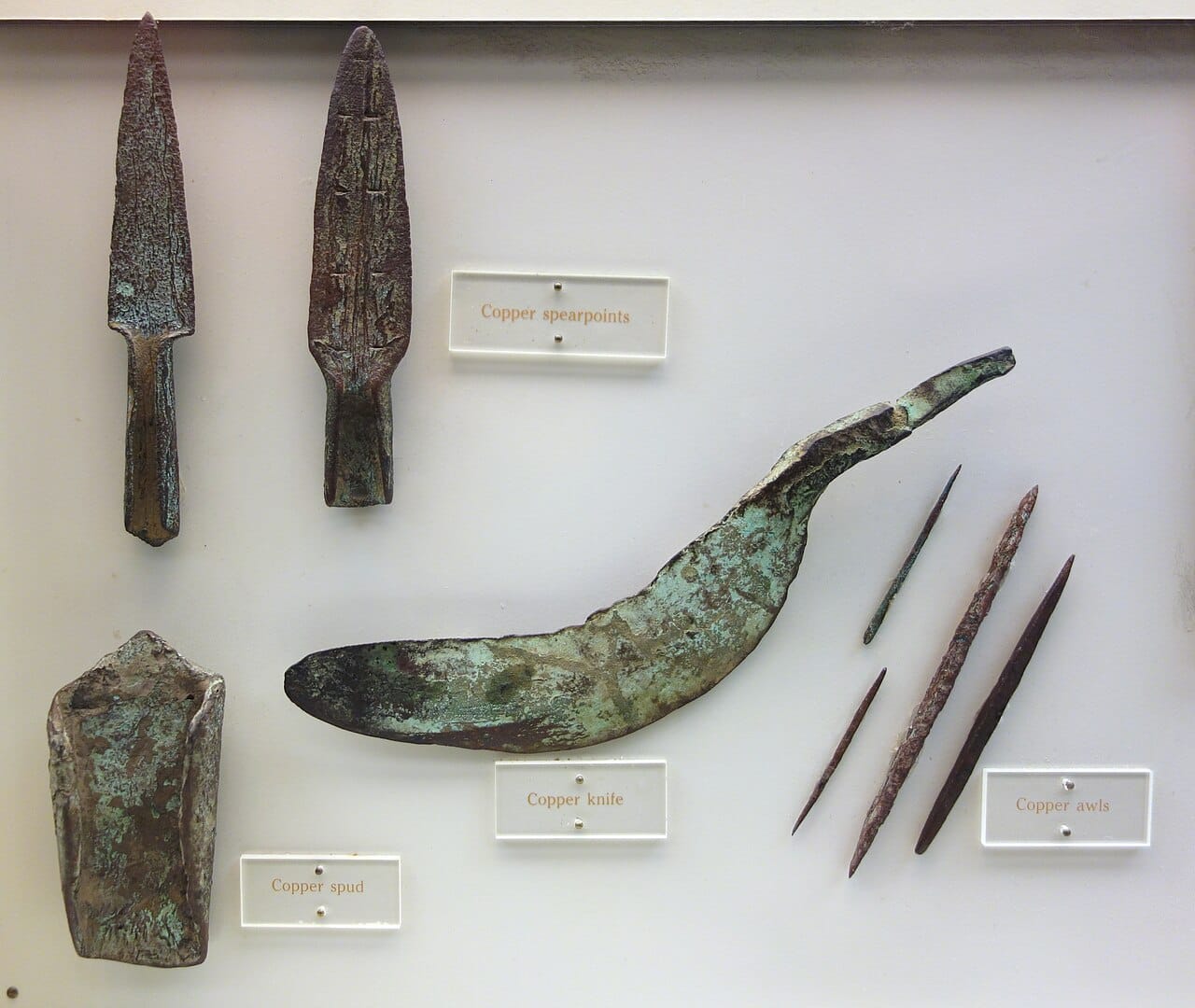
These copper artifacts were so common that as American and Canadian settlers moved west in the 19th century, they being found everywhere. By the 20th century, 13,000 artifacts were documented in Wisconsin alone. Still, the settlers were reluctant to believe that such sophisticated technology was the product of indigenous people who occupied the region long before European settlement. But hundreds of copper mining sites have been found in the area.
The Old Copper culture lasted for 5000 years. During that time they traded their copper artifacts with other Native Americans, but they never developed bronze weapons or the warrior elites that often followed after bronze weapons in the Old World.
Ironically, it was the eventual rise of elites in the Old Copper culture which led it its end, about 1500 B.C.E. After that time, copper was used only for jewelry. One might speculate that the elites reserved the metal for themselves. The people returned to using stone tools and thrived as their ancestors always had.
Varna, Master Goldsmiths of Old Europe: 4500 B.C.E.
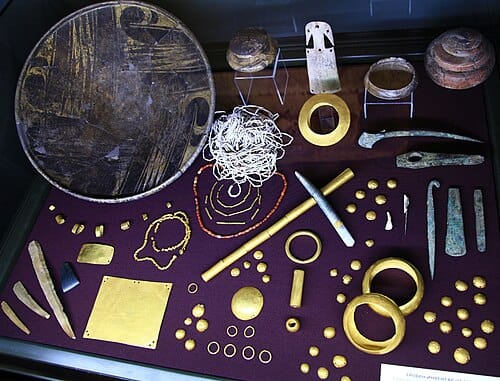
Six thousand five hundred years ago, two thousand years before Stonehenge or the Great Pyramid of Giza, people living near Varna, Bulgaria, made grave pits with the oldest known gold jewelry in the world. The necropolis of Varna, dated to 4500 B.C.E., contained several elite burials with gold pendants, copper tools, flint and obsidian blades, beads and shells from the Aegean Sea. The beads show evidence of polishing by a lap wheel.
Salt was an important resource for the Varna people. Solnitsata, a small town close to the Varna site, was home to more than three hundred people, and included facilities for production and storage of salt and pottery. These valuable commodities may have been the reason for the walls around the site.
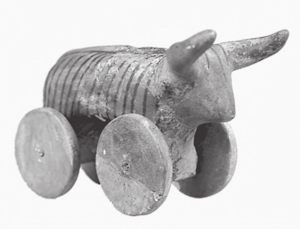
The Varna people were part of a complex of agrarian cultures in Eastern Europe that archaeologists call Old Europe or Danubian, for the Danube river. Their neighbors included the Cucuteni–Trypillia culture located in present day Ukraine, Moldova, and Romania, who had several cities with thousands of people, and had the earliest known evidence of potter’s wheels and wheeled toys anywhere in the world.
While the Cucuteni–Trypillia culture appears to have been largely peaceful and egalitarian, the Varna necropolis may represent some of earliest evidence of the transition to more a hierarchical and warlike culture in the area, as it contains the oldest elite male burial yet found in Europe.
Ozieri, Stepped Temple Builders of Sardinia: 4000 B.C.E.
Five hundred years after the Varna necropolis and a thousand miles to the west, a Neolithic culture called the Ozieri constructed one of the earliest stepped temples in the world, at Monte d’Accoddi, on the island of Sardinia, Italy, in the western Mediterranean. The temple, dated to six thousand years ago, has been compared to ziggurats, stepped temples first built around the same time in Mesopotamia. But there is no evidence of contact between Mesopotamia and Sardinia. The temple was an independent achievement of the local Ozieri culture, and perhaps their most sacred site.
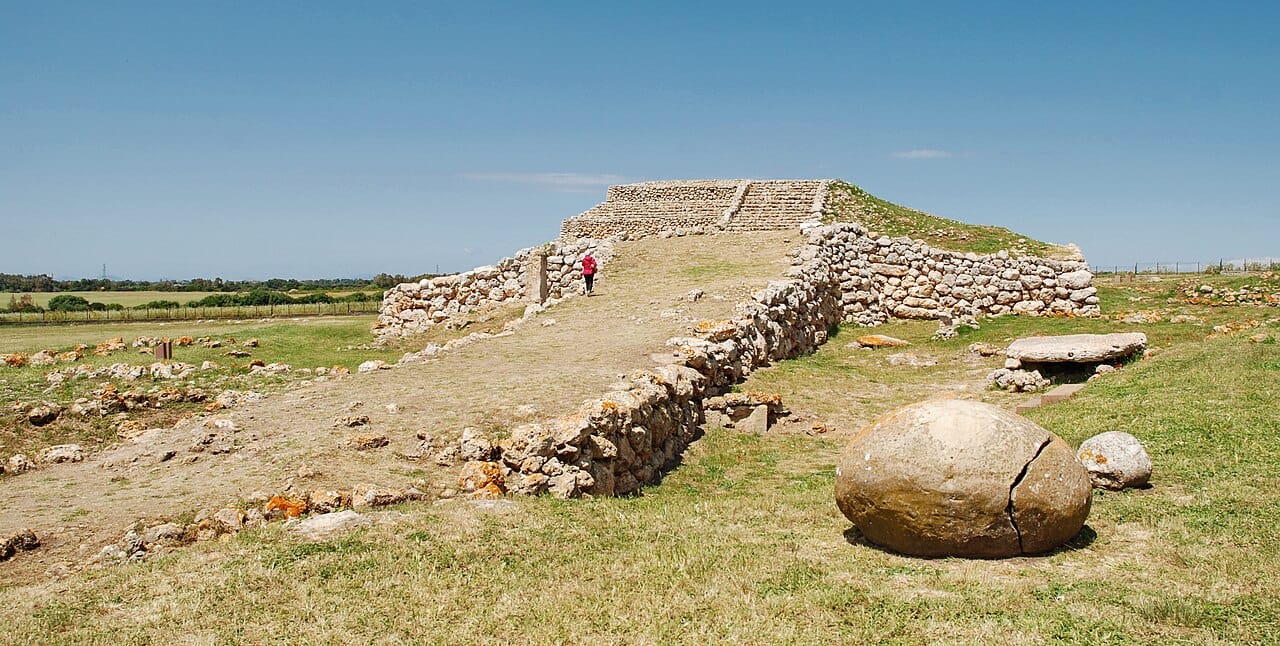
Archaeological excavations have found over 200 Ozieri sites across Sardinia. The Ozieri were organized around hunter-gathering, with evidence of early agriculture and animal husbandry, and mining and trading obsidian, which was found in large quantities on the island. They live in circular stone huts, in small villages with no walls, and few weapons, indicating a peaceful culture. Some sites have evidence of specialized crafts and metal working. The Ozieri buried their dead in communal tombs cut from underground rock formations or cliff faces, such as the Necropolis of Anghelu Ruju.
Female figurines found at Ozieri sites indicate that the Ozieri worshipped a mother goddess. Similar figurines found at Malta and the Cyclades islands in the Aegean suggest the Ozieri were part of a network of Neolithic island cultures in the Mediterranean at this time.
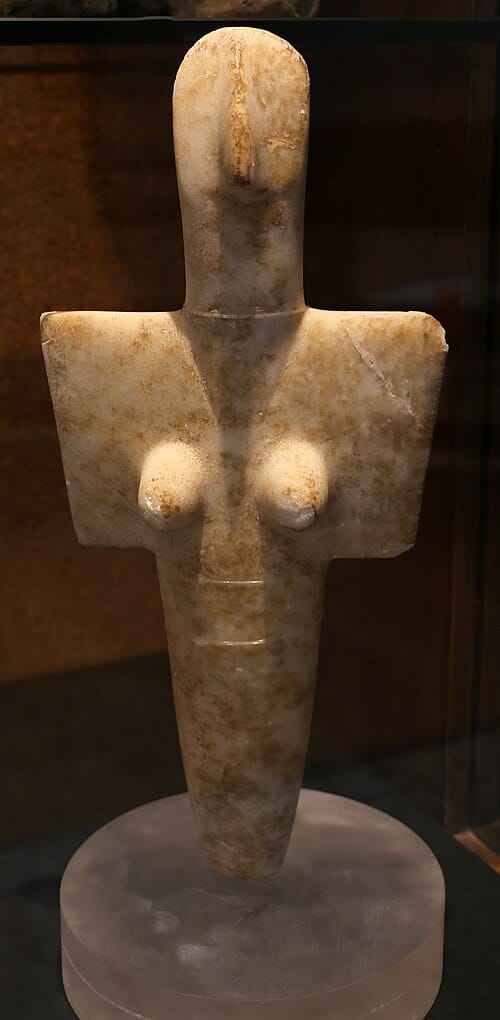
The Ozieri culture faded and Monte d'Accoddi was abandoned after a thousand years, following the emergence of new cultures showing influence from the Beaker culture of mainland Europe.
The people of Sardinia later developed the Nuragic civilization, a warlike culture that may have been one of the Sea Peoples who invaded the Eastern Mediterranean, including Eqypt, around 1200 B.C.E, in the late Bronze Age.
Caral, First City in the Americas, 2600 B.C.E.
Four thousand years before the Inca empire dominated Peru, a culture now called the Caral-Supe (or Norte Chico) civilization built Caral, the first city in the Americas, in Supe river valley near the Pacific coast.
Caral was first documented in 1905, but its age and importance was not fully understood until after 1994, when Peruvian archaeologist Ruth Shady began working at the site. In 2001, she published the first radiocarbon dates for the site.
Caral covers more than 150 acres, has six stepped pyramid temples, and may have had a population of 3000 people. It seems to have been a sacred city for the entire culture. It had no pottery, no walls, and no weapons or other evidence of warfare, though several human sacrificial victims were found. The site was used for about six hundred years, then abandoned around 2000 B.C.E., possibly due to climate change.
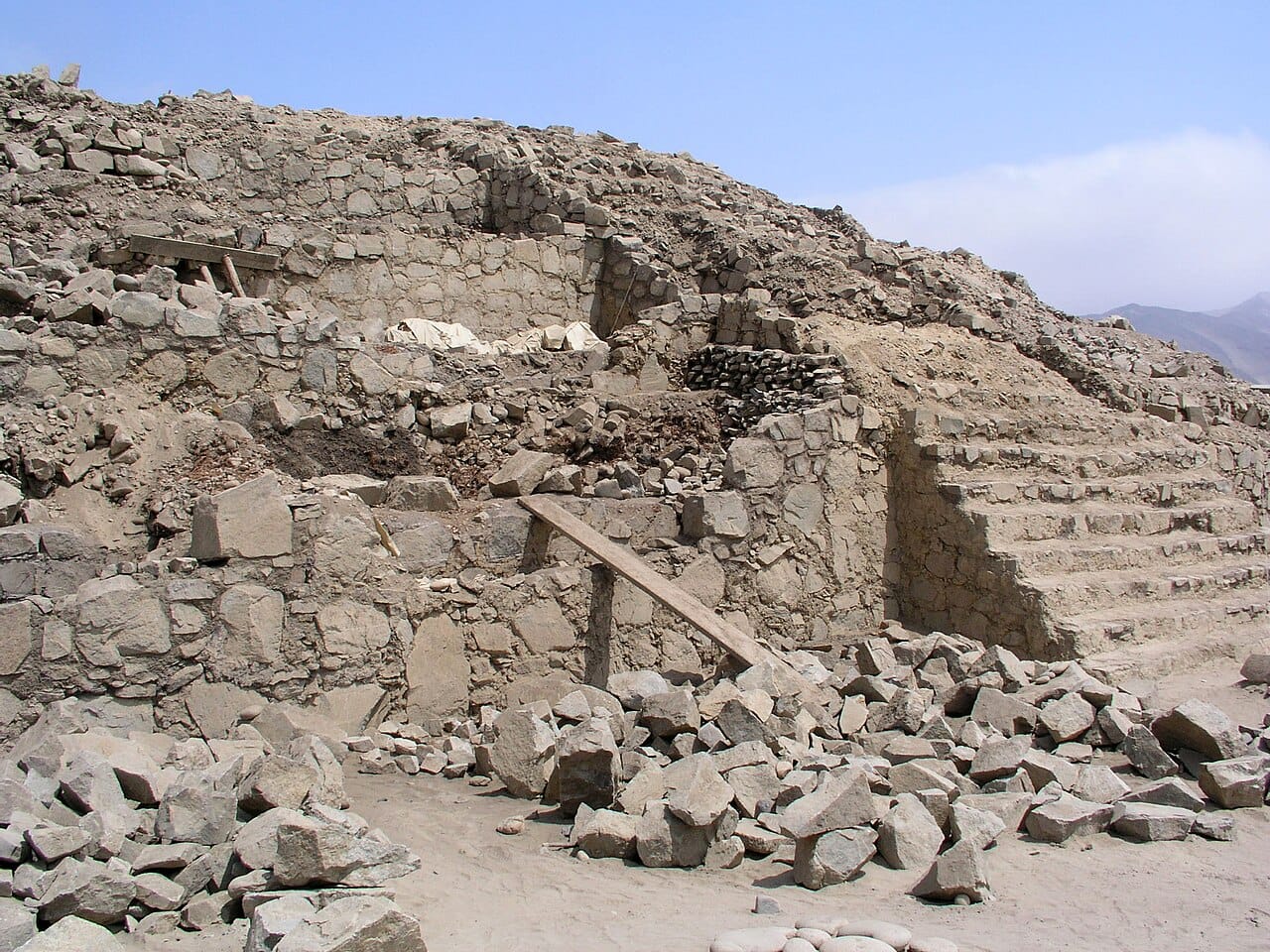
One artifact found at Caral is a quipu, a record-keeping device of knotted strings still in use in Inca times four thousand years later. Flutes were also found.
Since the discovery of Caral, even older sites of the Caral-Supe civilization have been found in Peru, in particular Huaricanga which is larger than Caral and has been dated to 3500 B.C.E., almost a thousand years earlier.
Caral was designated a UNESCO World Heritage site in 2009.
Kerma, Land of the Bow, 2500 B.C.E.
For the last stop on our tour of ancient civilizations, we come to Africa, the cradle of humanity. Four thousand five hundred years ago, the city of Kerma, near the Nile River in present-day Sudan, became the capital of the Kerma culture, a kingdom of Nubia that contended with Egypt's Middle Kingdom to the north.
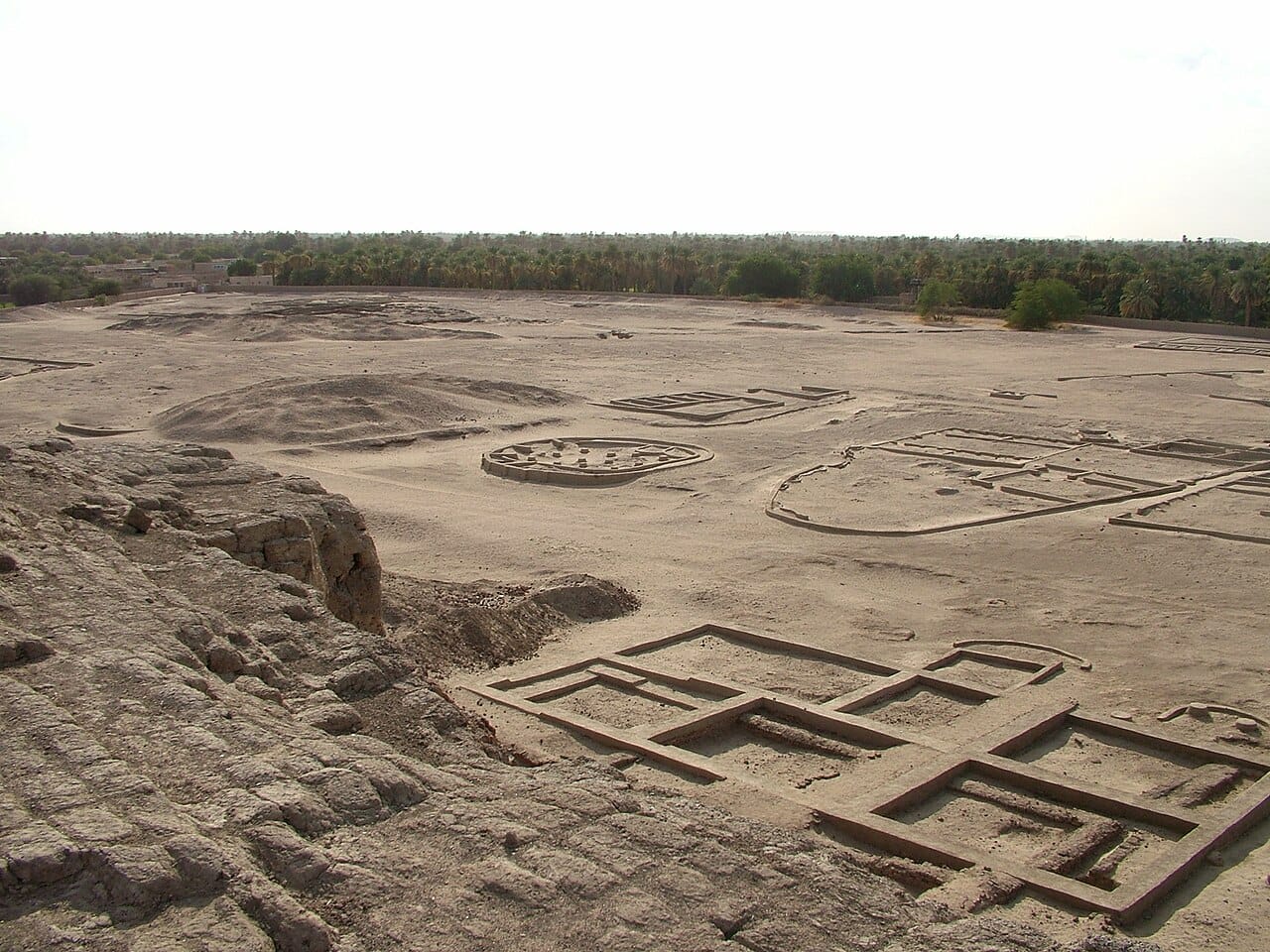
The Kerma culture used mud brick for construction. Their kings were buried in tumulus mounds, sometimes accompanied in death by hundreds of people from their households. One of the major structures at Kerma is the Western Daddufa, a massive tomb and temple structure that can be seen in the bottom left of the image above. At its height in 1700 B.C.E., Kerma had a population of at least 10,000 people.
Kerman religion was animist, with most religious art depicting animals rather than people, especially rams, lions, hippopotami, and giraffes. They were also skilled jewelers, and metalsmiths, able to work with copper and bronze.
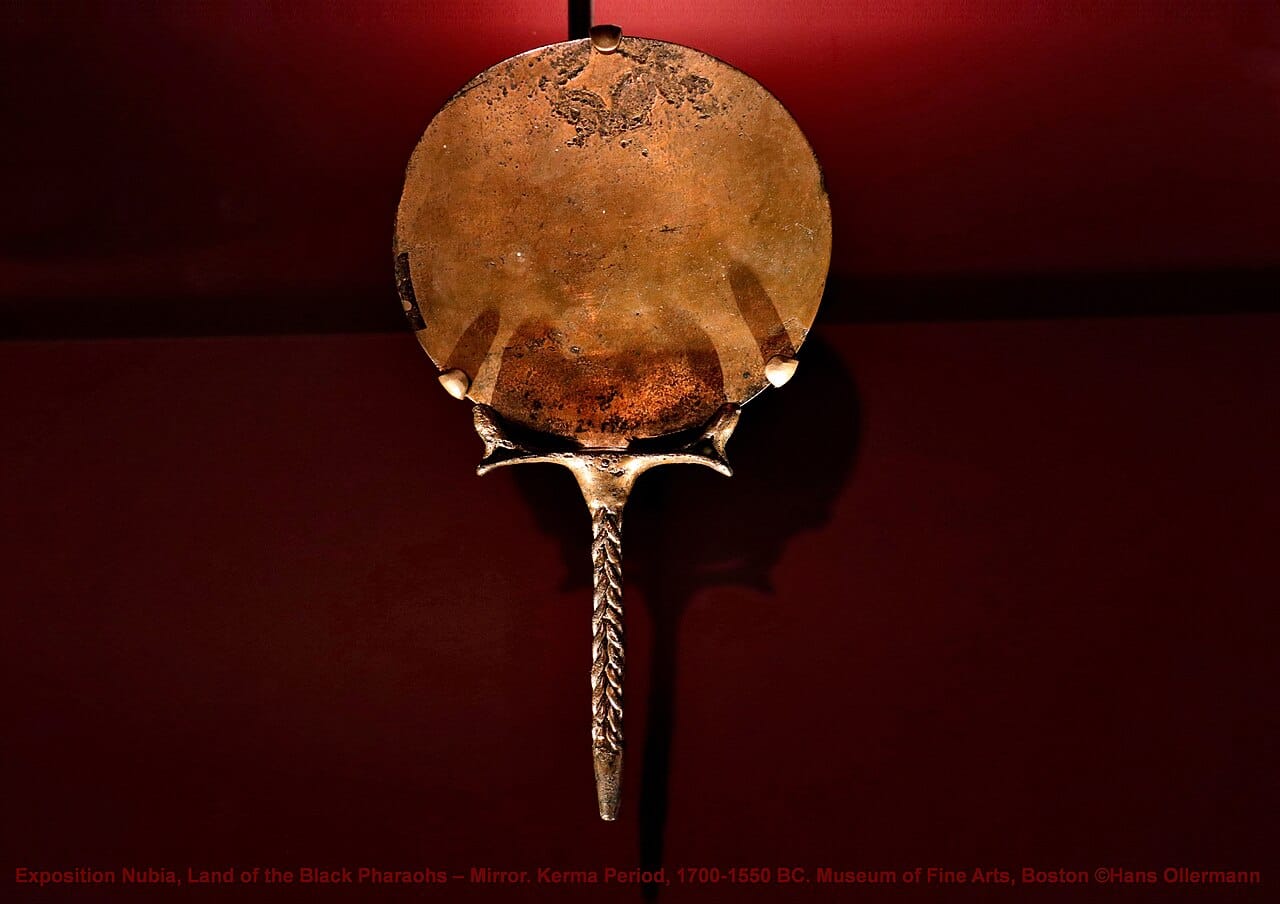
Archaeology at Kerma began in the 1920s, but was skewed by racist assumptions of the European archaeologists of the time, who assumed Kerma must be an Egyptian outpost, and that black Africans could not have achieved these things on their own.
But Kerma was independent. A clue to how it stayed that way can be found in the Egyptian name for Nubia: "Ta-Seti" or "land of the bow". Kerma was famous for its archers. There are many instances at Kerma of young warriors buried with long bows. Kerma's archers kept it independent for a thousand years, until it was finally conquered by the Egyptian pharoah Thutmose I in 1500 B.C.E.
A Shared Story
I have been fascinated with history, anthropology, and archaeology since I was a boy. I have watched with excitement and hope as these fields have changed and evolved in the past half century.
Each of the civilizations I included in this article contributed something to the shared story of humanity. You might have noticed that none of these cultures were empires, none had writing, and only the last one, Kerma, had kings. When I look at these cultures, I see people trying to make sense of the world and make better lives for themselves and their communities, or at least hold onto what they have already built.
In this time of rising authoritarianism, where elites, like the pharoahs, try to seize control of the narratives and put their names on everything, we can remember that the lives and achievements of ordinary people matter, and always have.
About the Author
Chris Struble is a retired software test manager based near Seattle, with a lifelong passion for writing in service of imagining a better world. He writes speculative fiction and music set in ancient worlds. He is also a freelance technical writer and editor.
If you enjoyed this article, check out his debut adult fantasy novel Shield of the Goddess, set in a world inspired by ancient civilizations such as these.